

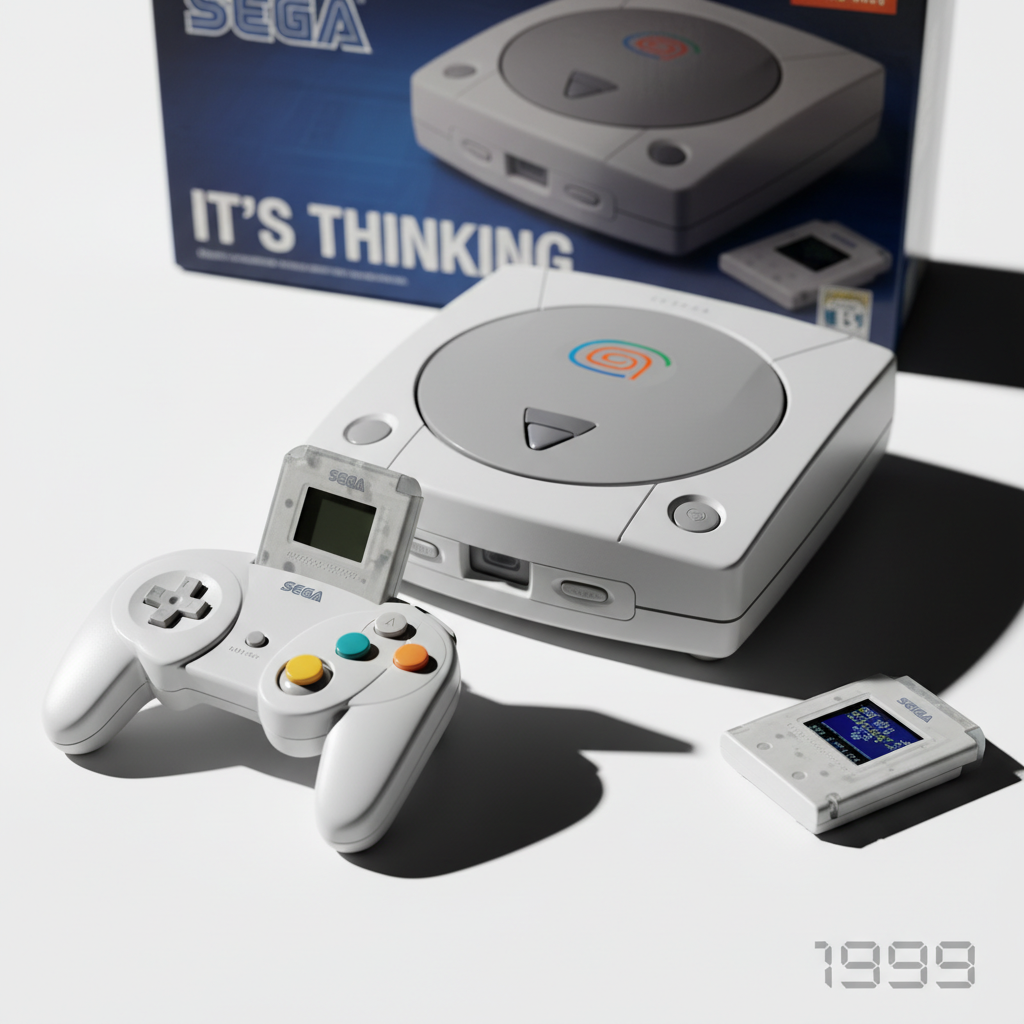
The Launch
September 9, 1999—9/9/99—was a massive day for Sega fans. The North American Dreamcast finally hit shelves. After the Saturn basically tanked, Sega was putting everything they had into this sleek white box. It wasn’t just another console; it was a hail Mary to stay ahead of the PlayStation 2 and Nintendo’s N64. Sega’s “It’s Thinking” campaign really leaned into that sense of something new. They weren’t just selling a toy, they were selling the idea of a machine that could actually talk back to you, especially with that built-in 56K modem and the promise of online play.
The whole launch felt like a massive attempt to wipe the slate clean after the Saturn’s mess. We all remember how that went: fragmented releases, terrible third-party support, and a developer experience that was, frankly, a nightmare. Sega tried to do things differently this time with a unified global push and better incentives for devs. On paper, the hardware was incredible. You had a 200 MHz Hitachi SH-4 CPU, a PowerVR2 graphics chip hitting 3 million polygons per second, and a custom Yamaha sound chip. It felt like the future was actually arriving.
The launch lineup was a dream. Sonic Adventure was the big one, and honestly, seeing Sonic in a full 3D, vibrant world was a total shock to the system. It proved the character could actually work outside of 2D. Then you had Soulcalibur, which was basically a perfect arcade port. The combat was tight, the visuals were stunning, and it set a bar for fighting games that most consoles struggled to hit for years.
If you were into sports, NFL 2K was the real standout. It actually felt better than Madden at the time, thanks to the animations and those first-person camera angles. It even had online multiplayer, which was wild for a console football game back then. For the arcade crowd, House of the Dead 2 brought that frantic zombie-slaying action home perfectly. You also had Power Stone for those chaotic arena battles and Ready 2 Rumble Boxing if you wanted a playful arcadey boxing game.
That 56K modem was the real differentiator. Sega was pushing this vision called Sega Net, promising a world where we could chat and compete from our living rooms. Even if the service didn’t fully mature right away, having the hardware built-in changed the conversation. You could jump into Quake III Arena or NFL 2K online long before that became the standard.
I still love the controller, too. It was ergonomic and solid, but the VMU (Visual Memory Unit) was the real kicker. It wasn’t just a memory card with a little screen; it was almost like a mini-console. In Sonic Adventure, you could actually raise Chao on the VMU, making for a stickier experience that had you thinking Sega even when you were away from the console.
The initial numbers were huge. In the first 24 hours, Sega pulled in $98 million. By the end of the weekend, they’d moved over 225,000 units. For a minute there, it actually looked like Sega might pull off the greatest comeback in gaming history. The Dreamcast felt like a symbol of hope for everyone who wanted Sega to stay in the hardware race.
The Fall
Even with that strong start, Sega was already in a bad spot by September 1999. The Saturn had been a financial disaster, and they were bleeding cash against the original PlayStation. That dual-CPU architecture in the Saturn was a headache for developers, and without third-party support, the console was basically starving. Sega reported a deficit of about $350 million for the fiscal year ending in March 1999. The Dreamcast was a massive gamble, but the damage from the Saturn era was already done.
Then Sony dropped the PlayStation 2 reveal in March 1999, and it was a total gut punch. The PS2 wasn’t just a console; it was a Trojan horse. Since it could play DVDs, and DVD players were still expensive at the time, it became a multimedia powerhouse that the Dreamcast couldn’t touch. The Dreamcast was a great gaming machine, but it couldn’t compete with the “all-in-one” appeal of the PS2. Its ironic to think Sony crushed a competitor by its support for physical media and now them and the rest of the industry are doing everything in their power to get rid of it.
The third-party exodus was just as brutal. When Electronic Arts decided not to support the Dreamcast, it was a massive blow. Losing titles like Madden and FIFA meant losing a huge chunk of the casual market. EA saw the writing on the wall—the PS2 had the DVD player and the deep pockets, so they went where the money was. Soon, Capcom, Namco, and Square Enix were all pivoting toward Sony. The library started to look thin, and it wasn’t hard to see why.
Piracy didn’t help matters either. The GD-ROM format was supposed to keep people from ripping games, but the security was cracked pretty quickly. By early 2000, the Utopia boot disc allowed people to run pirated games easily. It didn’t kill the system on its own, but for a company already struggling with cash flow, every dollar lost was another hole in the damn.
Sega tried one last desperate move in late 2000 by dropping the price to $99. It was a classic “clear the inventory” tactic, but they were essentially selling the hardware at a loss. It didn’t work. The PS2 was already dominating, outselling the Dreamcast nearly three to one. Sega just didn’t have the reserves to keep fighting a war of attrition.
The end finally came on March 31, 2001. Sega announced they were leaving the hardware business for good. It was a bitter pill for those of us who had been there since the Genesis days. Moving to third-party publishing only was a survival move, but it felt like the end of an era. Sega went from being a titan to a software house making games for their former rivals.
The legacy is definitely bittersweet. The Dreamcast died way too early, caught in a perfect storm of bad timing and corporate missteps. But man, the games were special. Shenmue, Jet Set Radio, Phantasy Star Online—these weren’t just games, they were experiences that pushed the hardware to its absolute limit. It may have been a console that was simply ahead of its time or the casualty of crap marketing.
The Home-brew Renaissance
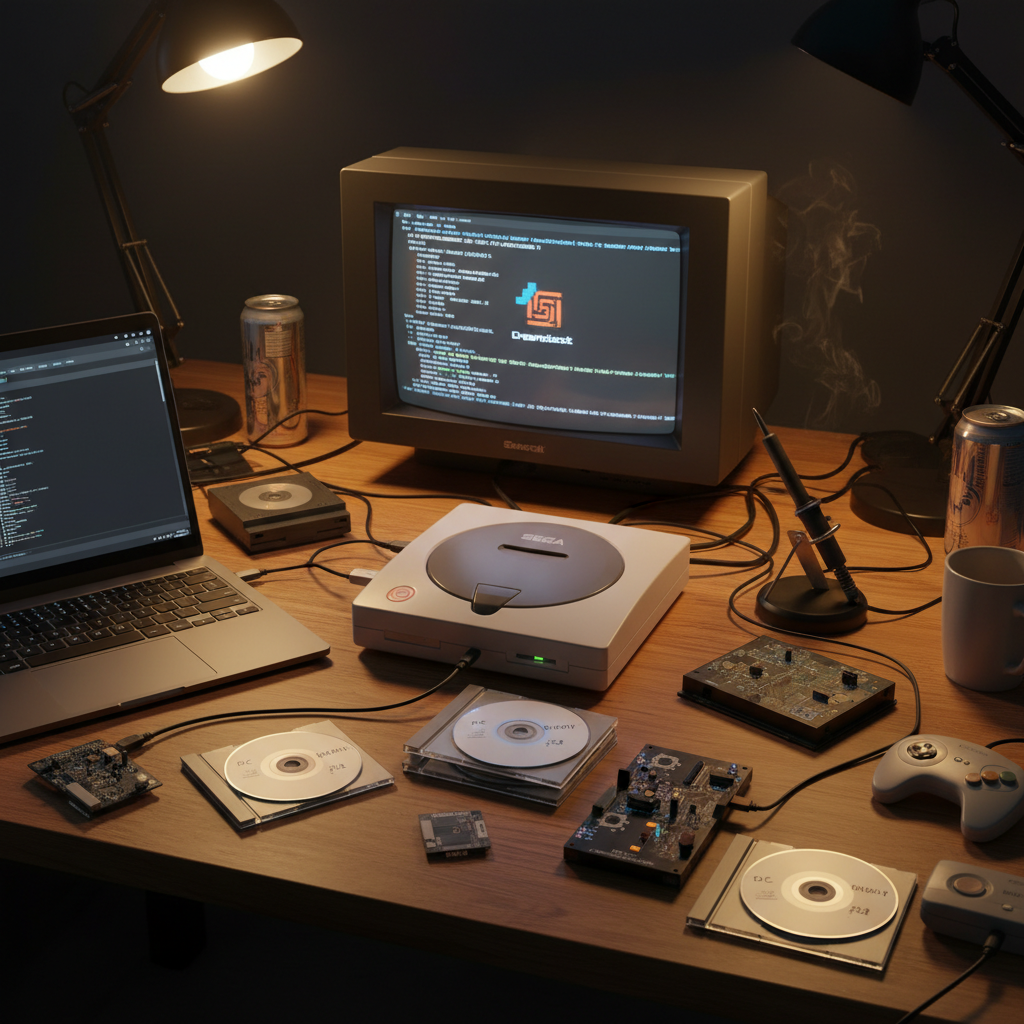
The Dreamcast’s death in 2001 wasn’t actually the end; it was more like a reset. Because the GD-ROM drive could read standard CD-Rs, the console became a playground for anyone with a PC and a disc burner. It turned the Dreamcast into a permanent fixture for hobbyists and coders who weren’t ready to let it go.
The real engine behind this was KallistiOS (KOS). It’s an open-source SDK that gave developers a way to work without the proprietary headaches of the past. It’s lightweight, well-documented, and it’s still the backbone of almost everything you see in the home-brew scene today. Whether it’s a simple tech demo or a full game, KOS makes it possible.
The community kept the flame alive through places like DCEmu and dreamcast-talk. These weren’t just forums; they were places where people actually learned how to code for the hardware. You had seasoned pros mentoring kids, and everyone sharing tools like the lxdream emulator. It was a genuine grassroots movement.
Hardware mods followed the software. If you want your Dreamcast to look good on a modern setup, you there are RGB mods. People like Citrus3000psi helped turn that fuzzy composite signal into something crisp and arcade-quality. But the real game-changer was the GDEMU. It’s a drive replacement that lets you run games off an SD card. It completely removes the need for those finicky GD-ROMs or burning CD-Rs. It makes the console practical to use in a modern living room with modern technology.
By the late 2010s, we saw this move into actual commercial territory. We’re talking about real, physical games. Pier Solar was a huge milestone, and then you had stuff like Xeno Crisis and Intrepid Izzy showing off what the hardware could still do. Even niche genres like survival horror (Hypertension: Harmony of Darkness) or shooters (DUX) found a home. The best part? They come in real boxes with manuals and everything. It feels like the good ol’ days.
Small publishers like RetroGuru and JoshProd have been essential here. They specialize in these limited-run physical prints that collectors crave. They aren’t just selling software; they’re selling a piece of history you can actually hold in your hands. Why do people still bother with this in the late 2020s? Honestly, it’s because the Dreamcast is a blast to work with and games on the console are fun! There’s no DRM, no region locking, and no corporate gatekeepers telling you what you can and can’t do. The PowerVR2 chip might be old, but when a skilled programmer gets under the hood, it still looks great. Plus, the community is just incredibly dedicated.
It’s pretty wild that in 2026, a console from 1999 is still getting new physical releases. That doesn’t happen with many other systems. The Dreamcast has evolved from a failed console into a living, breathing platform for creativity. It’s a reminder that great hardware doesn’t just disappear because the manufacturer stopped making it, where there are fans and nostalgia, cool gaming consoles like the Sega Dreamcast will live on.